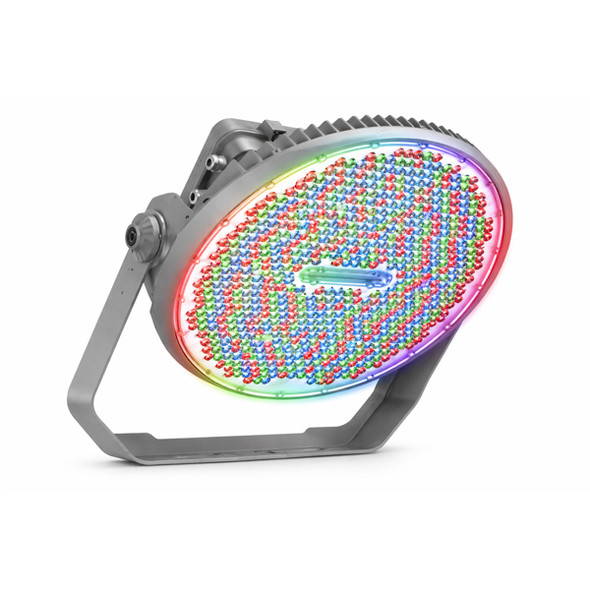
Stadium Lights

Stadium lights planned by sport, not just wattage: LED sports field packages for football, baseball, tennis, and pickleball, with free shipping on every order. The quick-spec table below the products maps pole heights, fixture counts, and IES RP-6 footcandle targets to each field type.

Products List

Sort By:

Display Type:
Filters
  • Product
  • Qty in Cart
  • Quantity
  • Price
  • Subtotal
  • Total: items /

Adding your products to cart

Stadium Lighting Planning Guide

LED Stadium Lights vs Metal Halide

LED stadium lights removed the two chronic headaches of metal halide sports lighting: warm-up time and lamp changes at height. LED fixtures reach full output instantly, restrike instantly after a power blip, and dim on demand for practice versus game-night scenes. Rated lives of 100,000 hours or more mean the lift truck that used to visit an 80 ft pole every few seasons mostly stays parked. Energy draw drops by half or more against comparable metal halide systems; a 1500W metal halide fixture is typically replaced by a 500 to 600W LED stadium led lights head with better beam control.

Football Stadium Lights and Baseball Field Lights: Aiming and Spill

Field sports lighting lives and dies on optics. Football stadium lights use narrow spot beams aimed in a designed pattern from each pole so coverage overlaps evenly at midfield. Baseball field lights split duty: infield poles carry more heads at tighter aim, outfield poles cover larger areas at lower levels. Asymmetric optics and external visors keep spill light off neighboring properties and glare out of players' sightlines, which is often the deciding factor in municipal approval for a new sports lighting installation.

Availability and Lead Times

Stadium fixtures are a category where multi-week factory lead times are common across the industry, and a lighting project stuck waiting on fixtures holds up the whole field schedule. QuickShipLights lists stock status and lead time at the item level on every product page, so you can build the fixture schedule around what can actually arrive on time. For lower mounting heights and general area coverage, see LED Flood Lights. Lots and access areas around the facility are covered by LED Parking Lot Lights and Street Lights, with the full site lighting range under Outdoor Area and Flood Lights.

Stadium Lights Planned by Sport, Not Just Wattage

Stadium lights catalogs mostly compete on wattage range and SKU count. That does not help you light a field. This page starts where a sports lighting project actually starts: the sport, the class of play, and the footcandle target it dictates. The quick-spec table below gives the typical pole height, pole count, and fixtures per pole for the five most common field types, aligned with IES RP-6, the recommended practice that governs sports and recreational area lighting design.

Per-Sport Quick-Spec Packages

SportTarget FootcandlesTypical Pole HeightPolesFixtures Per Pole
Football (high school, recreational)30 to 50 fc60 to 80 ft4 to 86 to 12
Baseball50 fc infield, 30 fc outfield60 to 80 ft6 to 84 to 12
Softball30 fc infield, 20 fc outfield (recreational)50 to 70 ft4 to 64 to 8
Tennis30 fc recreational, 50 fc competitive20 to 30 ft4 to 8 per court pair1 to 2
Pickleball30 fc18 to 25 ft4 per court1 to 2

Higher classes of play push targets up: televised and professional venues design to 70 to 100 plus footcandles with tighter uniformity ratios. Uniformity matters as much as raw level; a 2:1 max-to-min ratio on an infield keeps a fly ball visible through its whole arc. Send us the field dimensions and class of play and our lighting team will help you turn the table above into a fixture schedule.

Frequently Asked Questions About Stadium Lights

IES RP-6 guidance places high school and recreational football in the 30 to 50 footcandle range, measured on the playing surface. Larger venues and any field intended for television move to 70 footcandles or more with tighter uniformity requirements. Class of play is the single input that most changes fixture count and cost, so settle it before requesting a photometric design.

Most baseball fields run poles from 60 to 80 ft, with 6 to 8 poles in the classic A through H layout around the field. Infield poles carry more fixtures aimed tighter to hit 50 footcandles, while outfield coverage designs to around 30 footcandles. Softball fields, with shorter fence distances, typically get by with 50 to 70 ft poles and fewer fixtures.

In most cases, yes, and it is the most economical path to modern sports lighting. LED heads are usually lighter per lumen than the metal halide fixtures they replace, but always verify total EPA and weight against the pole's rated capacity, and check crossarm drilling patterns. Reaiming to the original photometric design, or a new one, is essential; LED beams are tighter and misaiming shows.

A 500 to 600W LED stadium fixture is the typical replacement for a 1500W metal halide head, cutting energy use by roughly 60 percent while improving uniformity and beam control. Because LED optics waste less light outside the target area, some layouts hit the same footcandle targets with fewer fixtures per pole than the original metal halide design used.

Modern sports lighters use asymmetric optics, precise narrow beams, and external visors or shields to keep light on the field and out of the surrounding neighborhood. A proper photometric design documents spill at the property line, which many municipalities now require before approving a field lighting permit. Fixtures with full cutoff accessories and dimming scenes make community approval substantially easier.

RP-6 is the Illuminating Engineering Society's recommended practice for sports and recreational area lighting. It defines illuminance targets and uniformity ratios by sport and class of play, from recreational fields up to televised professional venues. Designing to RP-6 gives a defensible engineering basis for fixture counts and aiming, which matters for bids, permits, and any project with public funding.

Yes, and controls are what make it practical. A field striped for football and soccer, or a baseball outfield doubling as practice space, can store separate aiming zones and dimming scenes per sport. LED systems switch scenes instantly, so a facility can run practice at reduced output and bring the field to full game-night levels on demand, saving energy between events.